2007 · Blenheim
CarbonScape

One of New Zealand's earliest biochar production initiatives, using microwave pyrolysis.
2007 - 2013 · Australia and NZ
Australia and New Zealand Biochar Researchers Network - online presence
The Australian and New Zealand Biochar Researchers Network is a collaborative group of scientists interested in advancing the understanding and application of biochar materials. Collectively our aim is to collaborate on research programs, promote and advocate the adoption of biochar investigation and use, and communicate the opportunities presented by biochar to policy makers, land managers, the public, industry and fellow scientists.
https://anzbiochar.org/
17 December 2007 · Massey University
Government sets up two biochar professorships at Massey University
Forestry Minister Jim Anderton announced two biochar professorships at Massey University, funded through the Government's Sustainable Land Management and Climate Change Plan of Action. One professorship covers how biochar behaves in New Zealand soils and the other covers processing biomass into biochar by pyrolysis. The aim was to attract people who could build a world-class centre of excellence in biochar research and use. Massey won the positions against competition from the universities of Auckland, Canterbury, Lincoln and Waikato.
Participants: Massey University, Ministry of Agriculture and Forestry
News release
November 2009 · Massey University
Professor Jim Jones joins the NZ Biochar Research Centre
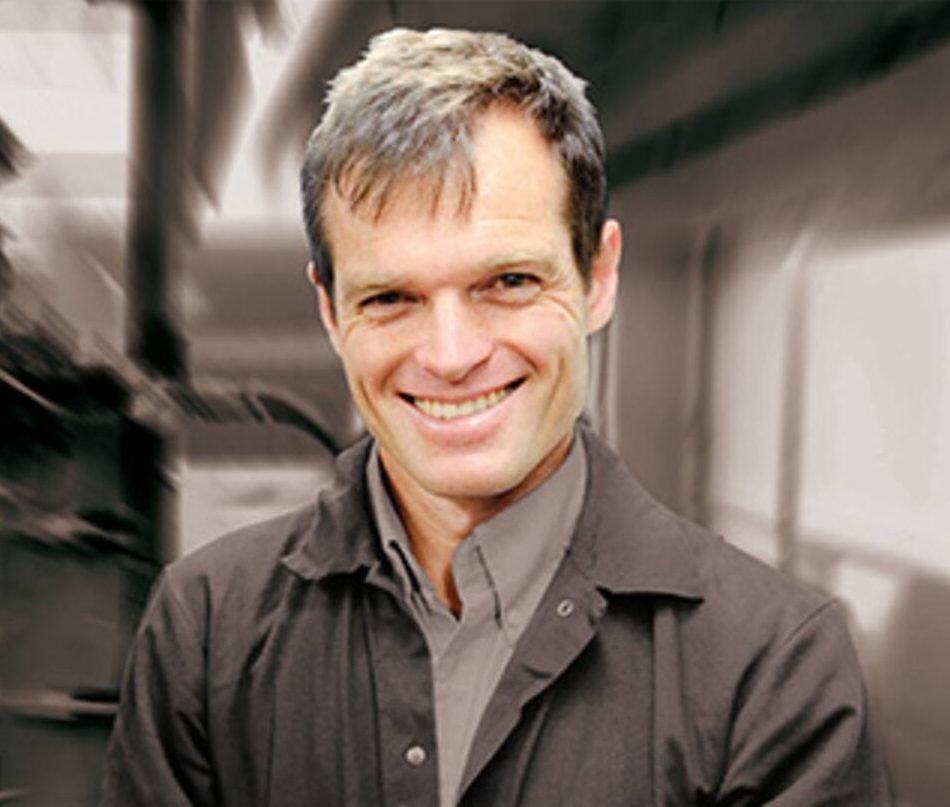
Professor Jim Jones, a chemical engineer, was appointed co-director of the New Zealand Biochar Research Centre at Massey University, joining soil scientist Associate Professor Marta Camps. Jones was to develop biochar production technology and the associated bioenergy generation, while Camps studied biochar's properties and its benefits for soil health in New Zealand conditions. The Centre investigates converting New Zealand biomass into biochar and putting it into soil for carbon sequestration.
Participants: Jim Jones, Marta Camps, Massey University
News release
May 2011 · Waiuku
Auger production prototype
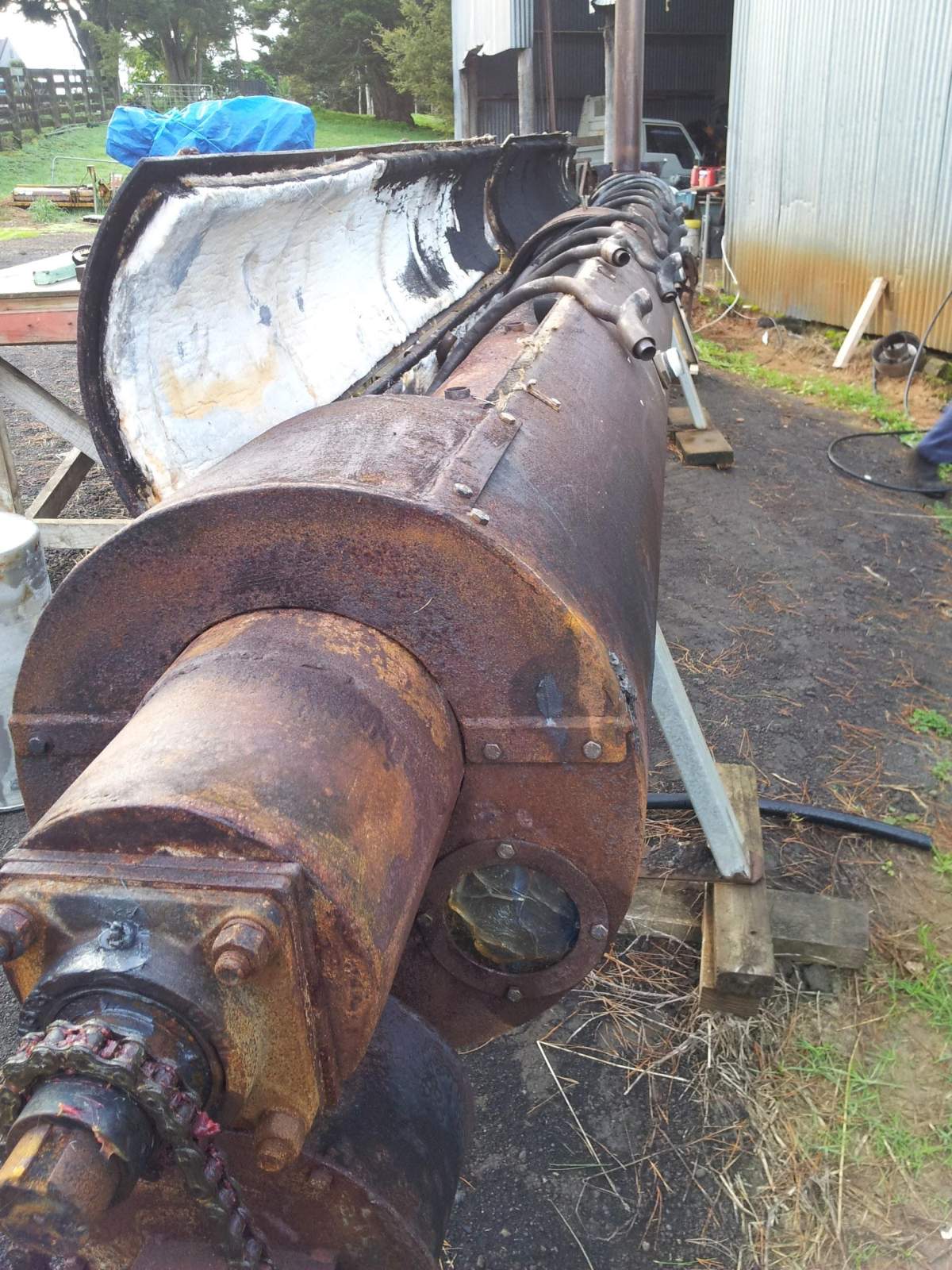
A biochar production system was developed and tested using an old grain auger (200mm x 6m) as a retort within a 500mm insulated pipe acting as an annular furnace space. Funded by the participants with some grant funding from OpusNZ. Commissioning activities started in October 2012 and ended in July 2013; biochar was produced during a number of commissioning runs. The auger was not progressed beyond R&D/commissioning phase due to a lack of resources and a nascent biochar market in NZ.
Status: de-commissioned.
Participants: SDE, Simon Day, Trevor Richards
2011? · Marlborough
Yealands Wines biochar and vineyard application
Yealands' long involvement with sustainable farming and organic wine production has included interest and pioneering action with biochar production and vineyard application.
Status: unknown.
Participants: Yealands Wines
undated (c. 2011-2012) · Mosgiel and national
Biochar workshop tour: Mosgiel and national
A biochar workshop tour including a stop in Mosgiel.
Participants: Dennis Enright, Paul Taylor; public
2012 · Bannockburn
SFF Project L12_136 — Understanding the Value of Biochar in Vineyards
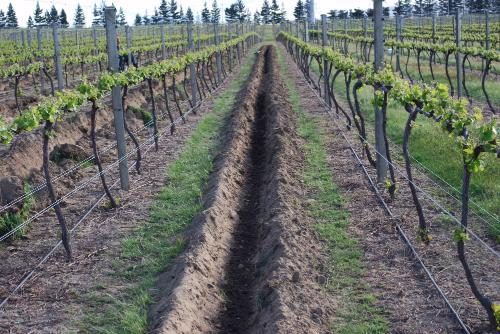
A collaboration between Mt Difficulty Vineyard, GrapeVision Ltd, Ahika Consulting and NZ Biochar Ltd. Contact: Mike Henare.
Participants: NZBiochar, Mt Difficulty Wines
Feb 2012 · Manawatu
KILNZ — Massey Uni NZ Biochar Research Centre Workshop
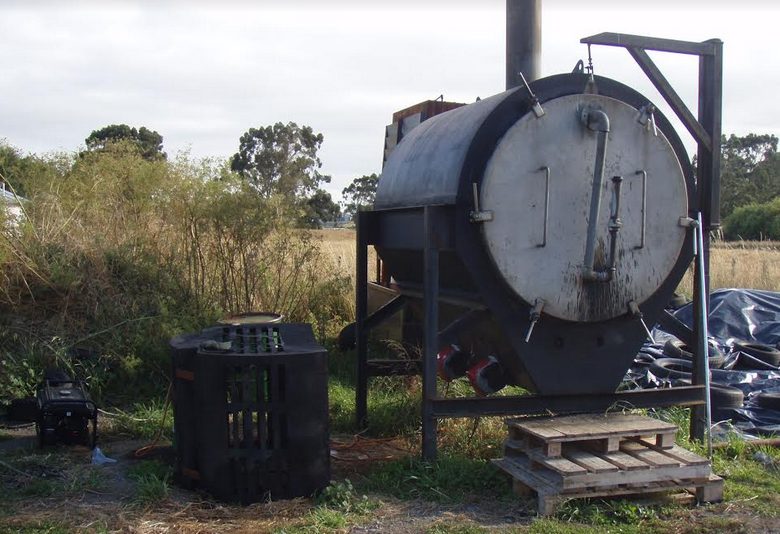
Diesel-fired retort kiln produced charcoal from 1) timber offcuts, and 2) compressed sawdust pellets/firewood. Charred pellets were surface-coated with clay to avoid dust combustion risks during application to soils using a Cross-Slot no-tillage seed drill.
Biomass: Pinus radiata. Method: KILNZ diesel-fired retort kiln, approx. 450°C.
Participants: Pari Rikihana, Don Graves
March 2012 · Feilding
Biochar and conservation tillage trial
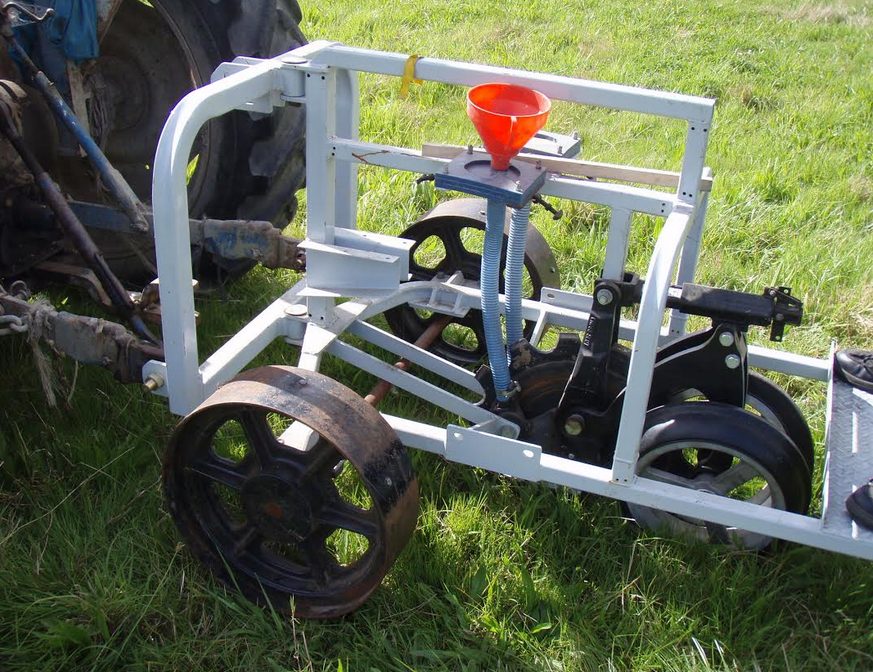
A "cross-slot" no-tillage seed drill applied two types of biochar into pasture root zones of Manawatu silt loam soils: 1) a 50:50 v/v biochar/water slurry, and 2) clay-coated charred compressed sawdust pellets.
Presented at the NZBRC 2013 workshop; published by CRC Press (2013) in chapter 7 of "Biochar and Soil Biota", "A Comparison of methods to apply biochar into temperate soils".
Participants: Don Graves, Cross Slot, Nelson Bays Mycorrhizas
https://www.taylorfrancis.com/books/e/9780429071935
2013 · NZ-wide
AllBlackEarth website established
Earl Mardle and the late John Allen set up the AllBlackEarth website to promote interest in biochar in New Zealand, and a monthly newsletter followed. Trevor Richards has continued to keep the website going.
Participants: Earl Mardle, John Allen
AllBlackEarth website
3 May 2015 · Waiuku
AllBlackEarth demonstration day
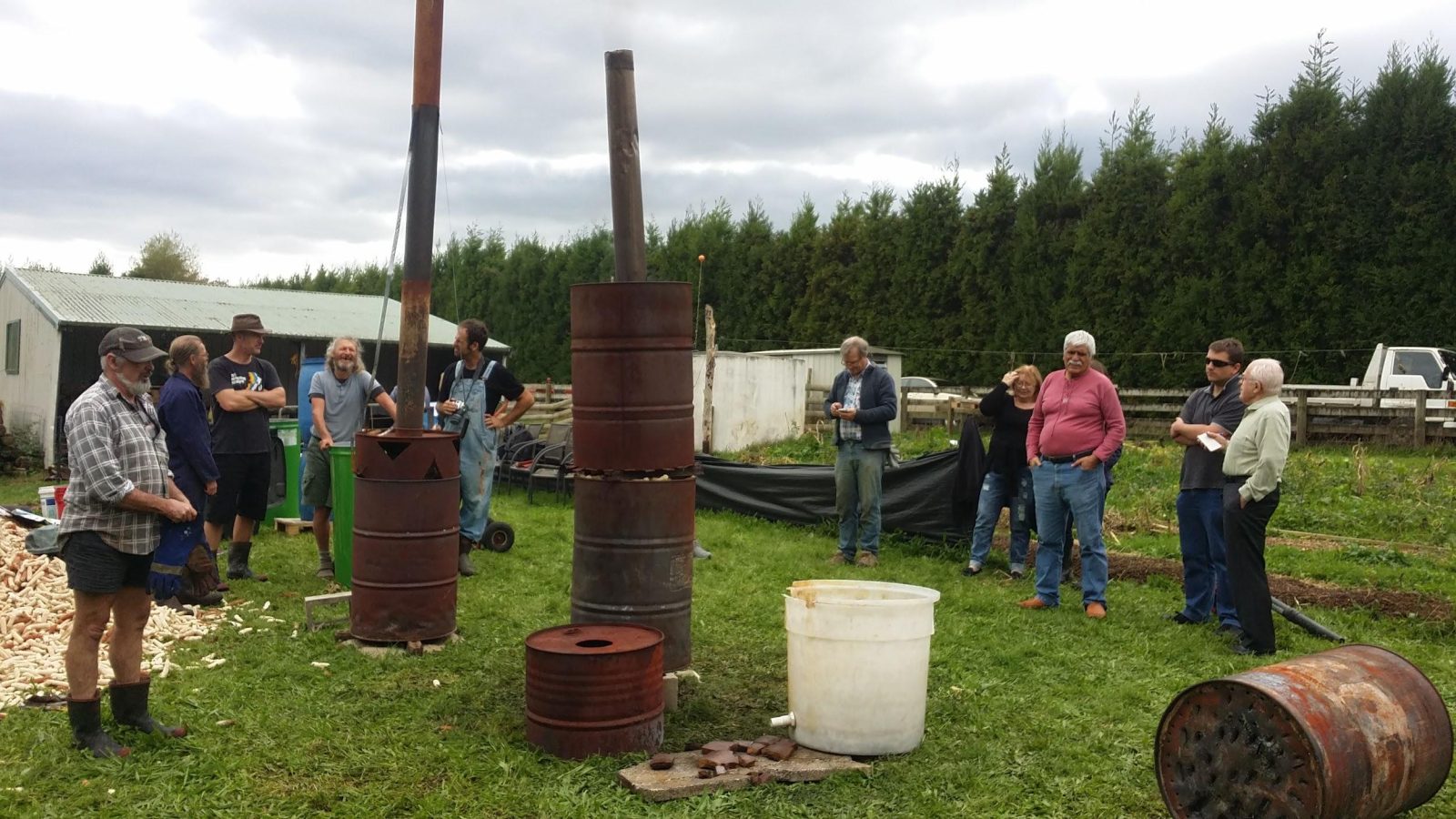
The first public biochar production demonstration event carried out by the AllBlackEarth team, using maize cob with TLUD and kontiki kilns.
Participants: ABE, public
June 2015 · Rotorua
High Carbon Boiler Ash (HCBA)
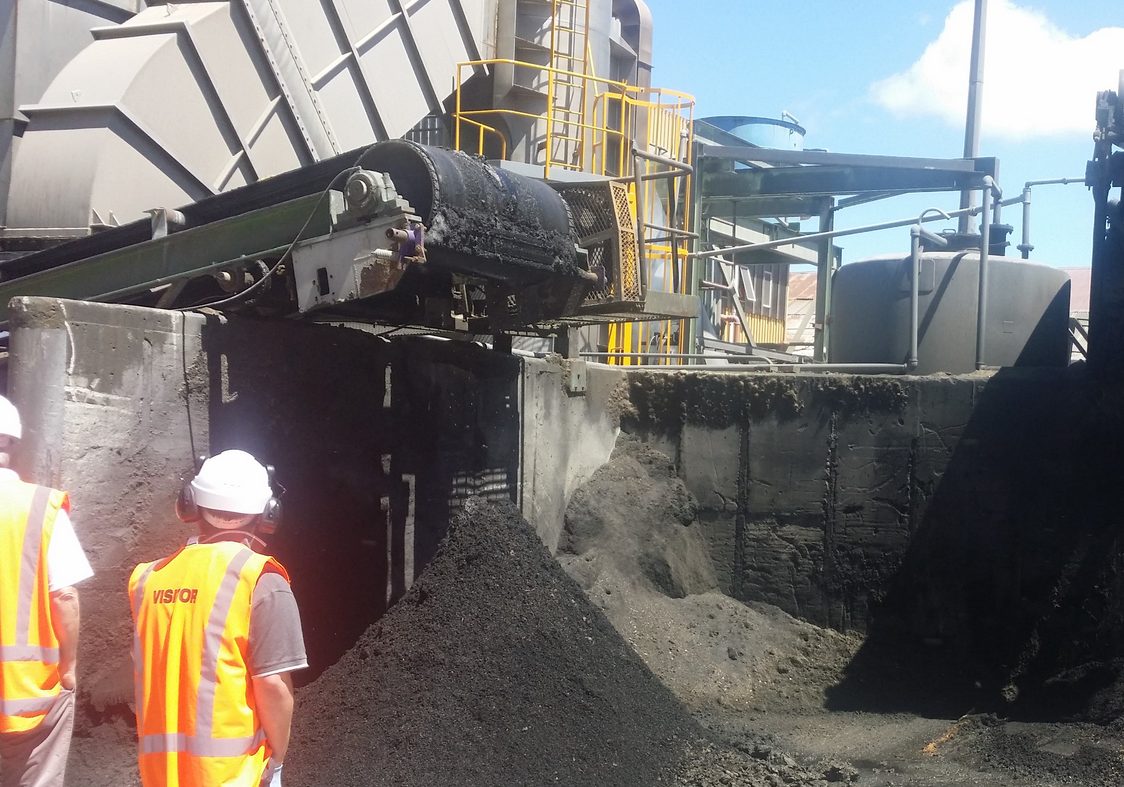
HCBA is produced when old or inefficient boilers fail to burn their biomass fuel completely to ash, resulting in a mix of charcoal, unburnt wood chips and ash — an excellent soil amendment combining biochar with minerals taken up by the trees. Care is needed in sourcing HCBA in NZ to avoid contamination from treated wood.
SDE established an HCBA processing and distribution centre near Rotorua, participating in a range of application trials; to date approximately 14,000 m3 of HCBA has been distributed for trials and commercial applications.
Participants: SDE
June 2015 · Waiuku
Herd-home bedding trial
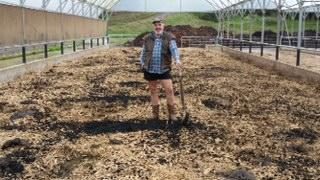
HCBA was mixed with existing bedding material and subsequently composted and applied to pasture.
Participants: SDE
March 2016
CarpN Neutral
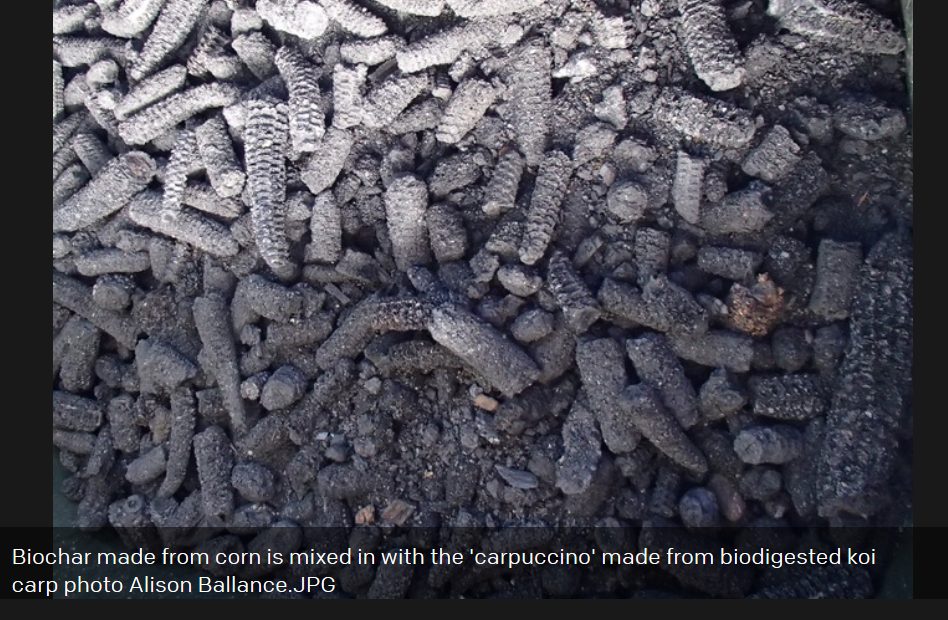
A rapid digestion process breaking down 3-4 tonnes of fish into dry granular fishmeal ("carpuccino"), mixed with locally sourced biochar (waste corn / pine residue) and sent to a factory to be turned into pellets. The biochar provides carbon and structure, binds ammonia, reduces aroma and helps create a slow-release fertiliser, trialled at four dune restoration sites to replicate nutrients once naturally supplied by seabird guano. HCBA soil mixes were also used in ongoing horticulture trials.
Basis for cooperation with BNNZ still to be worked out (potential for overlapping agendas).
Status: unknown.
Participants: WRC
7 March 2016 · Waiuku
Large-scale pit burn trial
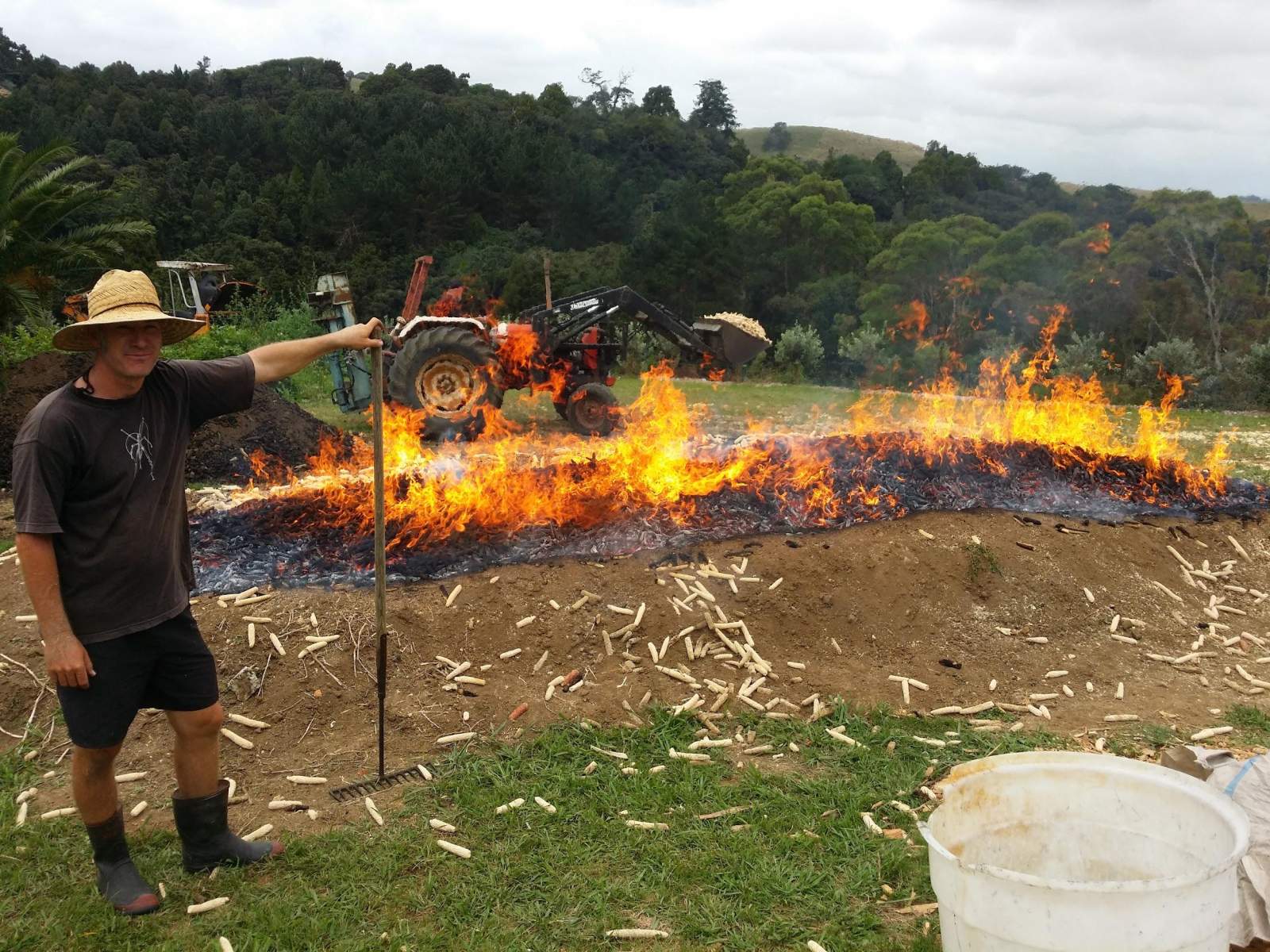
A large-scale pit burn was trialled using approximately 20 m3 of maize cob, a seasonal waste product from the seed production industry — one of a number of artisan fire-management methods for low-tech biochar production, described as a 'flame cap' or 'top-fed open-draft' (TFOD) production system.
Temperature approx. 600°C.
Participants: SDE, friends
2017? · Australia; North Waikato
SoilPro receives High Carbon Boiler Ash for soil amendments
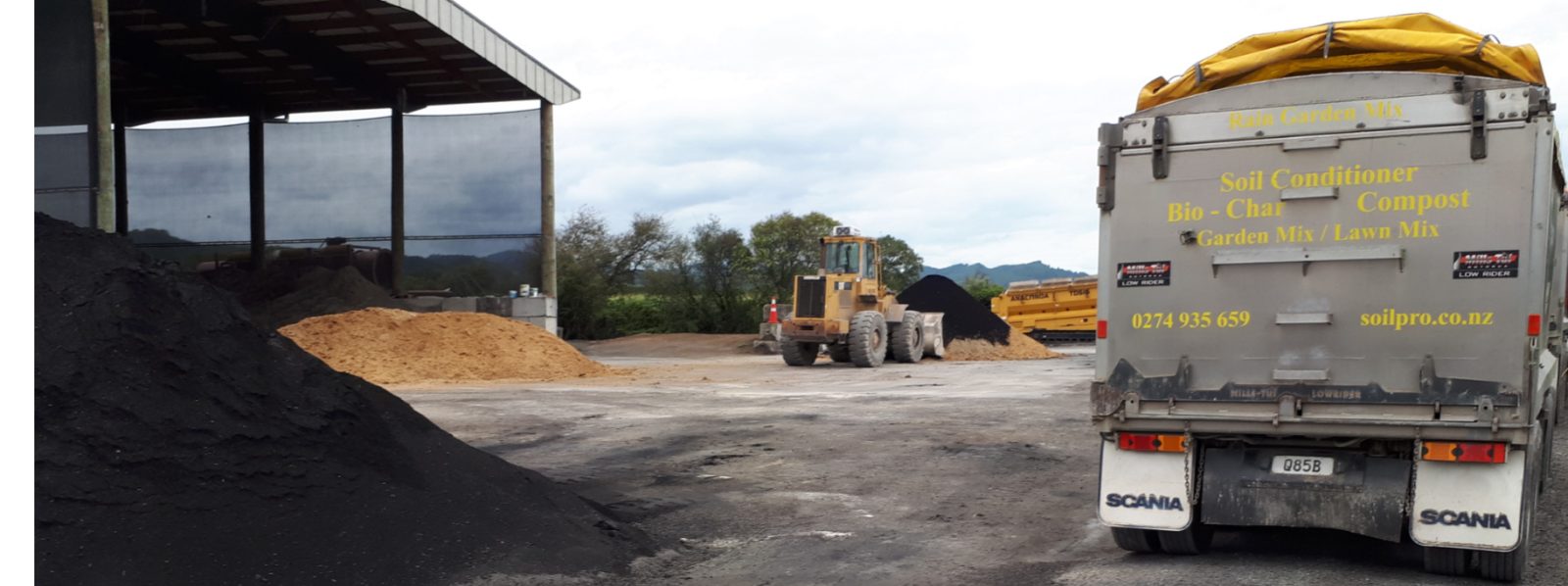
Biochar in the form of HCBA from Rotorua is being transported to SoilPro processing centres in North Waikato for mixing into a range of commercial soil amendments.
Participants: SoilPro
2017 · Australia and NZ
ANZBI (Australia New Zealand Biochar Initiative) announced
Australia New Zealand Biochar Initiative was announced at the ANZBC17 conference and has
subsequently been actively recruiting NZ membership (individual and corporate). Later morphed into ANZBIG.
ANZBIG website
August 2017 · Waikato
Dairy goat bedding trial
A long history of dialogue with the dairy goat industry on biochar recently led to agreement on the establishment of biochar bedding trials with the dairy goat industry R&D group. HCBA delivery pending at time of writing.
Participants: SDE; Bruce McDowell
May 2018
AllBlackEarth biochar workshop tour (overview)
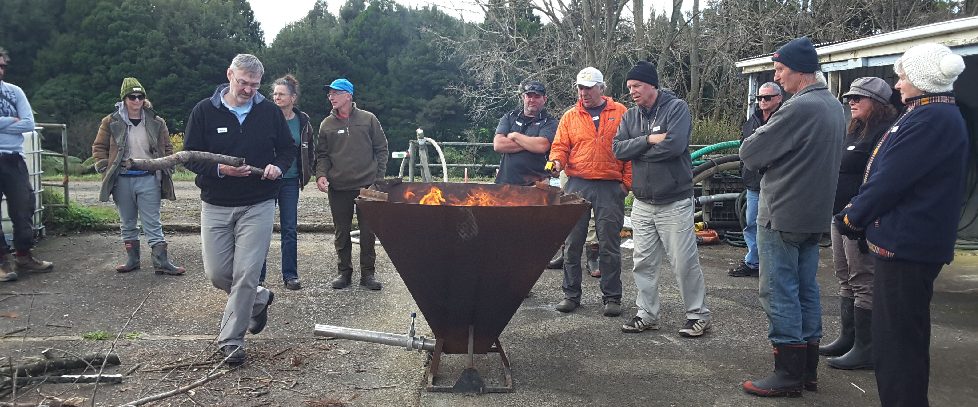
A series of five biochar education and training workshops conducted by Dennis Enright (NZBiochar) and Trevor Richards (Biomass Carbon Services Ltd) through May/June 2018. Funded by participant fees and some sponsorship from SoilPro NZ. Target audience: commercial orchards and vineyards.
Participants: NZBiochar, Biomass Carbon Services Ltd, public
24 May 2018 · Cromwell
Workshop 1: Cromwell (walnuts)
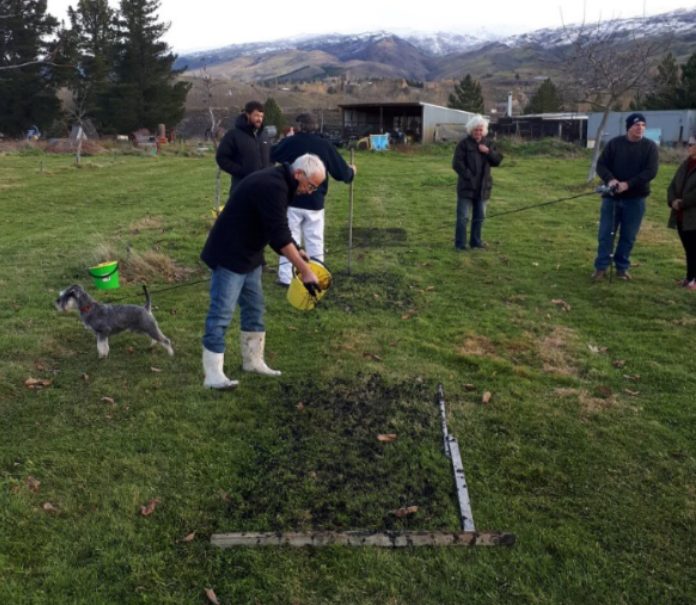
Biochar was made from dried willow and eucalypt branches by flame-cap pyrolysis in a bath, replicating a trough kiln, then crushed manually and broadcast on to 1x2m plots midway between rows of walnut trees (alternating biochar/control plots). Application rate 4.0 l/m2 (approx. 10 t/ha at an estimated bulk density of 0.25).
Participants: ABE, NZ Nuts Ltd
29 May 2018 · Nelson
Workshop 2: Nelson (Kaimira Wines)
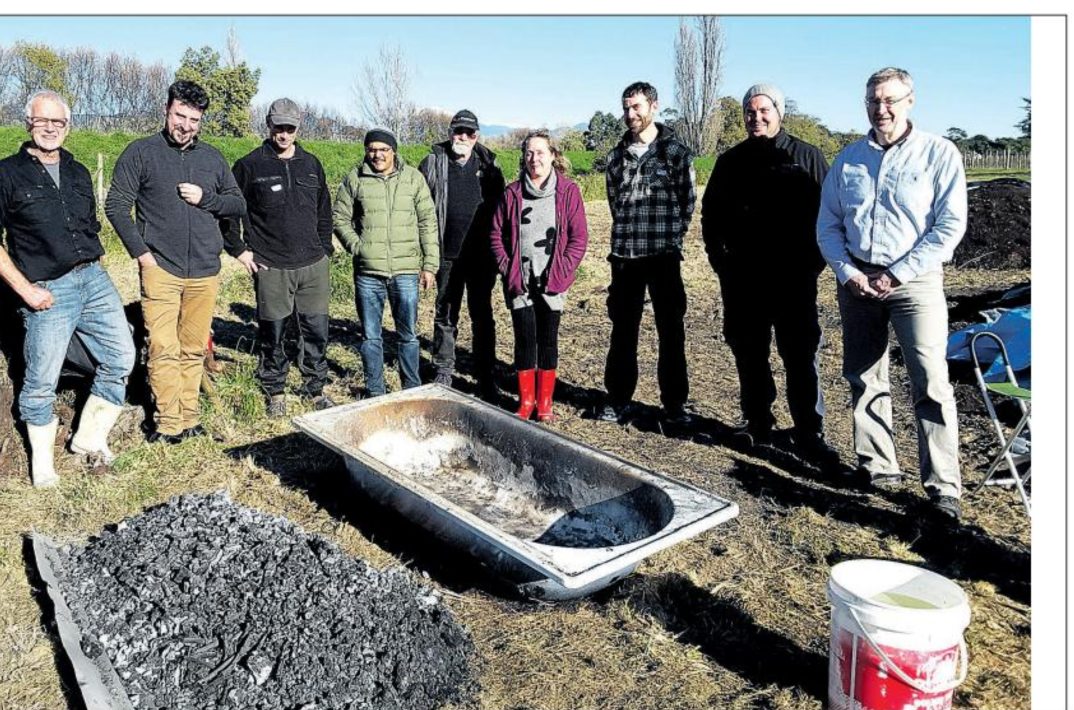
Biochar made from dry chunky vine trunks and branches using an open trough (bath) flame-cap system, then crushed by hand and broadcast on a 1m x 5m strip directly below the vines, alternating biochar/control plots across vine rows 2-4. The trial vines were noted for lower vigour, attributed to lower soil fertility from gravelly, river-adjacent soils.
Participants: ABE, Kaimira Wines
📎 Nelson Mail: "Biochar for horticulture, improving soils" (6 June 2018)
1 June 2018 · Waihi
Workshop 3: Waihi (Chaos Springs)
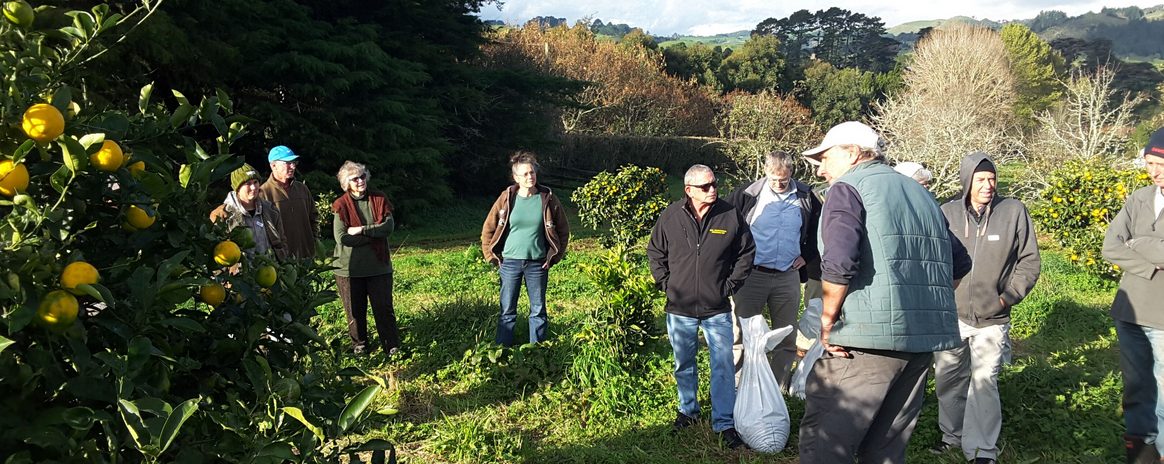
Biochar made from mostly dry acacia branches in a small kontiki kiln, top-dressed under lemon trees (1.25m diameter circle) at 10 t/ha, paired with adjacent nil-control trees. Some Verrucosis and borer present in the orchard. A cyclone pump system was demonstrated for spraying organic liquid nutrients and soil injection, plus mixing ground biochar with water for pumped application.
Participants: ABE, Chaos Springs
5 June 2018 · Waiuku
Workshop 4: Waiuku (Waipipi Organics)
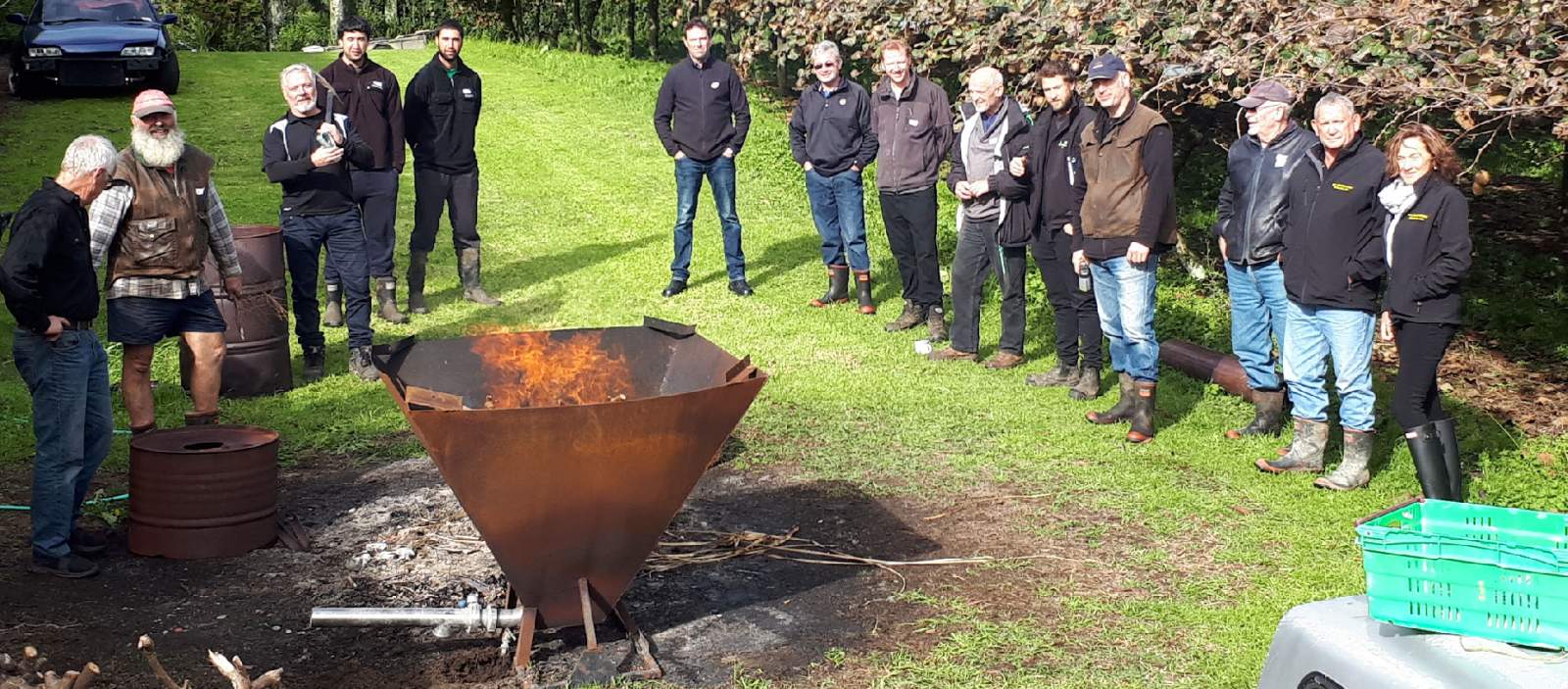
8 litres applied in a shallow trench (approx. 15cm wide x 15cm deep x 2m long) beside a vine, with a further 8 litres surface-applied on an adjacent 1m strip. Biochar made in a small kontiki kiln using dry kiwifruit trunks cut out due to PSA infection.
Participants: ABE, Waipipi Organics
8 June 2018 · Gisborne
Workshop 5: Gisborne (apple orchard)
Biochar made in the same small kontiki kiln from trunk, branch and leaf wood from apple trees previously removed due to canker infection. Crushed and applied as 8 litres in each of two shallow trenches (2m long) either side of two apple trees, across bays 2-7 in row 9 (alternating biochar/control).
Participants: ABE (confidential)
30 June 2018 · Waikato
Dairy bedding trial
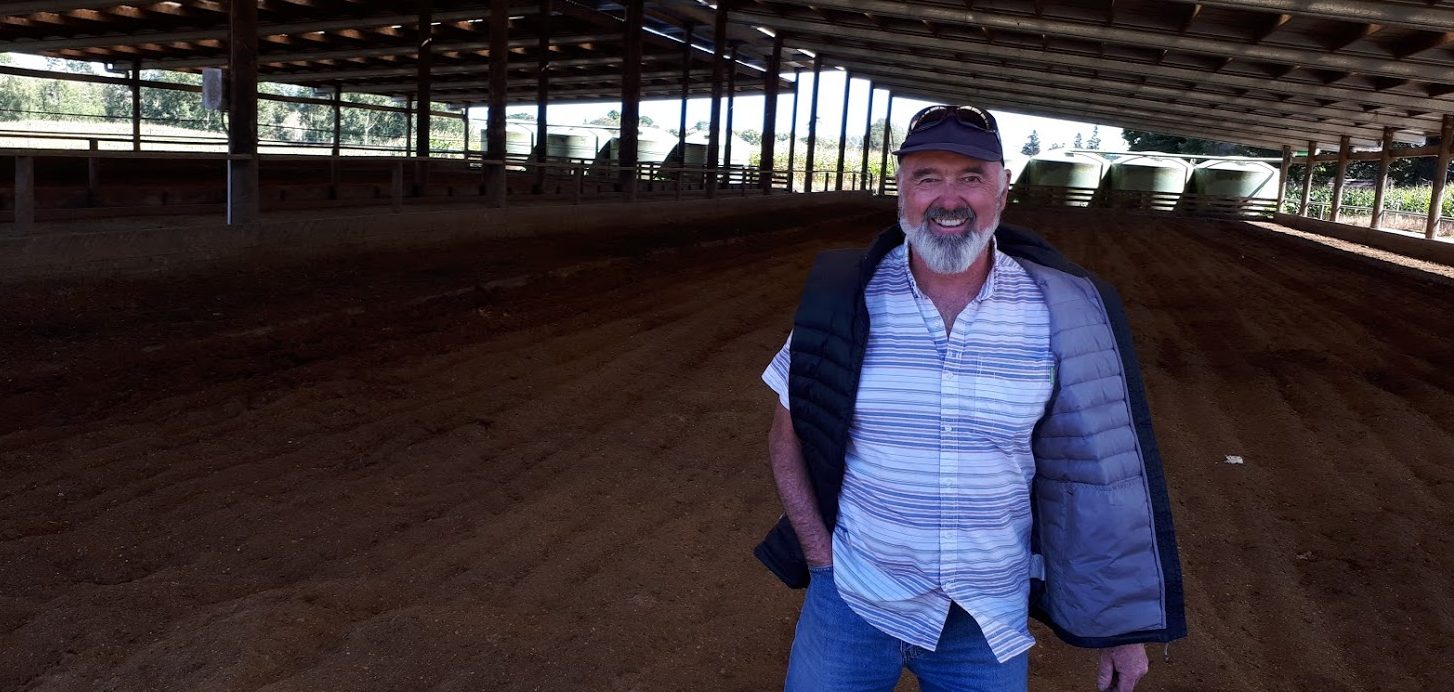
Feed pads, standoff pads, herd homes and composting barns — the pressure is on NZ dairy farms to find tools and methods to ease the impact of intensive farming on the land. No ongoing record-keeping or data has been available to date.
Participants: SDE (confidential)
Feb 2019 · NZ-wide
Biochar Network New Zealand established

Around this time, BNNZ was established to promote and support activities that provide widespread awareness, understanding and acceptance of biochar in New Zealand for the benefit of New Zealand's agriculture, industry and environment.
Participants: BNNZ members
Website
Feb 2019 · Auckland
Poultry bedding trial
Biochar is an effective and proven bedding addition in Europe but still new to NZ. An informal trial with HCBA was conducted in a deep-bed barn system; the bedding material was subsequently composted and applied to silage maize paddocks. HCBA was also provided to a meat poultry system to test as a bedding life-extender.
Participants: SDE (confidential)
May 2019 · International
Puro.earth publishes the first biochar carbon removal methodology

Puro.earth, a carbon removal standard and marketplace based in Finland, published what it describes as the first carbon removal crediting methodology for biochar to reach the market. It gave biochar producers a way to have the carbon stored in their biochar independently verified and sold as carbon removal credits, and was an early step in the development of international biochar carbon markets.
Participants: Puro.earth
Puro.earth biochar
May 2019 · International
IPCC 2019 Refinement adds biochar guidance

The IPCC's 2019 Refinement to its 2006 greenhouse gas inventory guidelines added an appendix on biochar, providing a basis for future development of a Tier 1 method for estimating changes in mineral soil carbon stocks from biochar amendments, along with new worksheets for biochar amendments to cropland and grassland soils. The approach uses the pyrolysis temperature and the H/Corg ratio of the biochar to estimate the share of its carbon that persists in the soil.
Participants: Intergovernmental Panel on Climate Change
IPCC Appendix 4: Biochar
June 2019 · Northland
Pārengarenga forestry residues trial
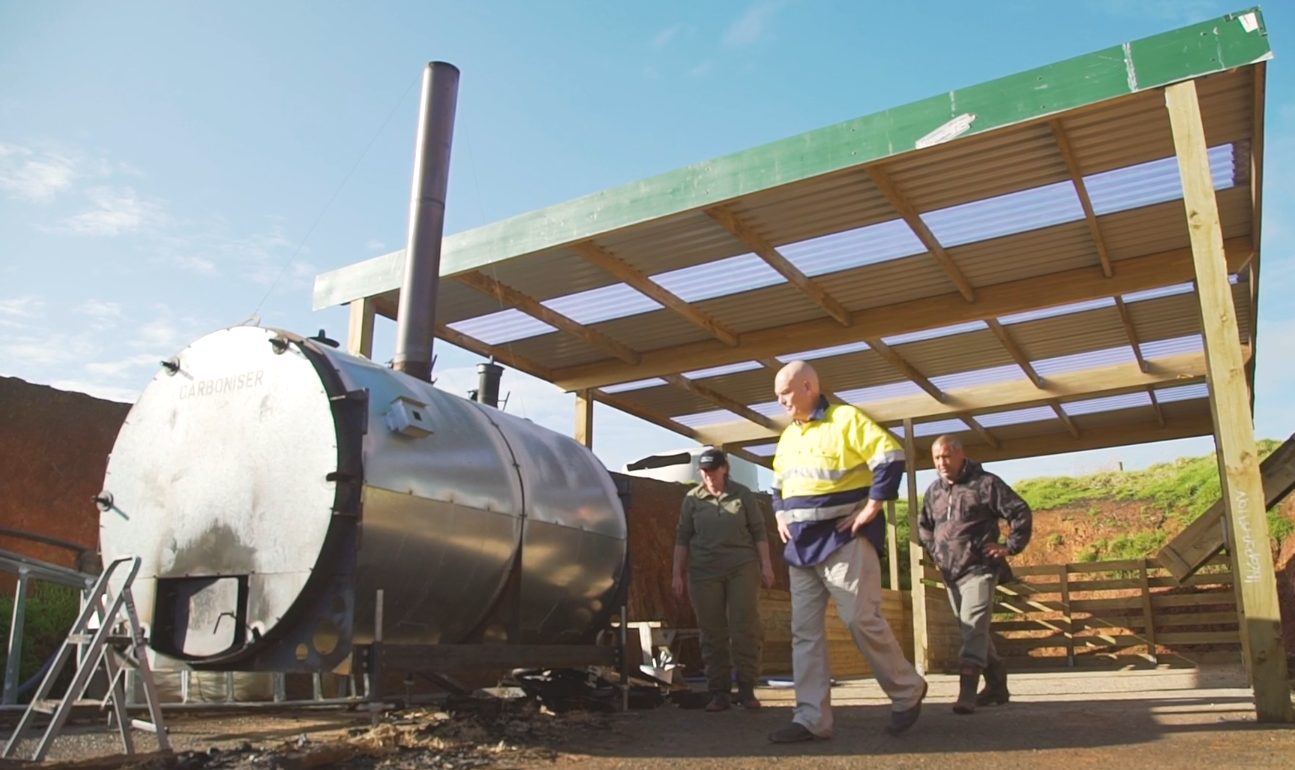
Interest in biochar grew from the enormous volume of wood waste generated by Northland's forestry industry — Pārengarenga owns 11,000 hectares of forestry, generating several thousand tonnes of waste annually. Research focused on three initial aspects: pasture enhancement, animal welfare and growth, and horticultural growing mediums, using retort pyrolysis at approximately 415°C.
SGS International was engaged to audit the process, so that should the work be ratified for carbon or methane credits, there is an endorsed track record from a recognised third party. The next step is exploring a continuous-power biochar process to generate saleable power for the local community and increase biochar generation capability.
Participants: Pārengarenga Corporation
19-20 June 2019 · Whenuapai
NZ Biochar Workshops: Beef, Dairy and Avocado
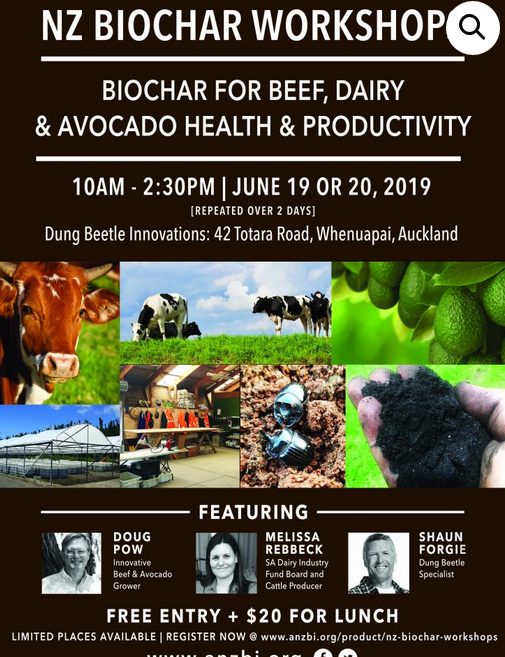
Workshops on biochar for beef, dairy and avocado health and productivity.
Participants: Dung Beetle Innovations, ANZBI
Trip report
8 November 2019 · Aokautere, Manawatū
Biochar Field Day, Aokautere
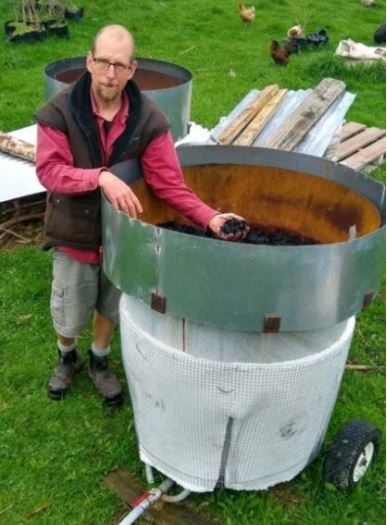
A field day hosted by NZ Landcare Trust and Slow Farm Ltd to explore what biochar could do in the Manawatū. The programme included a demonstration of how biochar is made, a presentation on biochar research from Massey University, and a workshop on the potential of biochar in the region.
Participants: NZ Landcare Trust, Slow Farm Ltd, Massey University
Event notice
6 March 2020 · Marlborough
Report on repurposing grape marc for Marlborough District Council
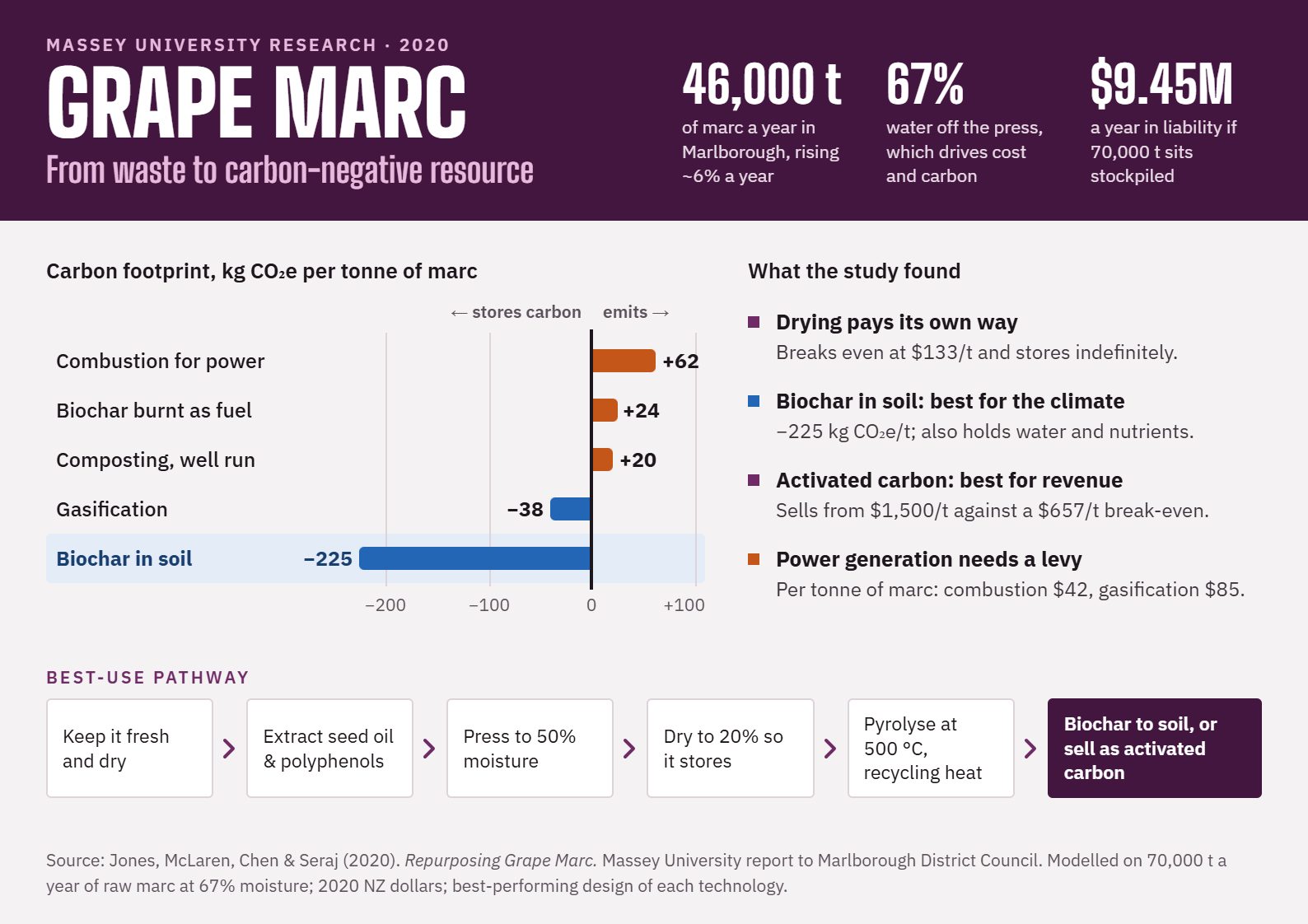
Massey University researchers (Jones, McLaren, Chen and Seraj) delivered a 106-page report to Marlborough District Council on repurposing grape marc, the solid by-product of winemaking. It looked at converting grape marc to biochar by thermal processing, or to compost, and compared the options on technical, economic and carbon-footprint grounds.
Participants: Marlborough District Council, Massey University
Research report
📎 Grape marc Report
2021 · NZ-wide (launched in Wellington)
Review of evidence for biochar's role in reducing agricultural emissions
Massey University researchers (Hedley, Camps-Arbestain, McLaren, Jones and Chen) reviewed the evidence for biochar reducing net greenhouse gas emissions from New Zealand agriculture. The review was published by the NZ Agricultural Greenhouse Gas Research Centre (NZAGRC, whose publications are now hosted by the Ag Emissions Centre) and launched in Wellington at an event hosted by the Ministry for Primary Industries, where BNNZ was invited to speak.
Participants: Massey University, NZAGRC, Ministry for Primary Industries, BNNZ
Review report
📎 Potential-Role-of-Biochar-in-NZ-2021.pdf
2021 · NZ-wide
BNNZ on TVNZ's 7Sharp
BNNZ was able to promote biochar on TVNZ's 7Sharp programme, in a well-produced video segment of about four minutes. BNNZ reported that it was very successful in raising awareness of biochar, judging by the comments that continued to be made about it afterwards.
Participants: BNNZ, TVNZ 7Sharp
Watch on YouTube
August 2022 and August 2025 · International
Verra biochar methodology (VM0044) released, later endorsed by the Integrity Council

In August 2022 Verra released VM0044, its methodology for biochar utilisation in soil and non-soil applications, for use in the Verified Carbon Standard programme. On 13 August 2025 the Integrity Council for the Voluntary Carbon Market approved the methodology (version 1.2) as a high-integrity approach for carbon credits.
Participants: Verra, Integrity Council for the Voluntary Carbon Market
Verra
30 Nov - 3 Dec 2022 · Fieldays, near Hamilton
Biochar at the Fieldays Forestry Hub
Biochar was among the innovations on show at the 2022 Fieldays Forestry Hub, alongside new timber treatments and Scion's work on converting woody biomass into aviation fuel feedstock. Hot Lime Labs presented a system that converts wood waste into clean CO₂ while producing high-quality biochar as a by-product.
Participants: Hot Lime Labs, Scion, Te Uru Rākau, Forest Growers Levy Trust
News release
February 2023 · East Coast and Hawke's Bay
Cyclone Gabrielle and BNNZ's "Carbon Rescue"
Cyclone Gabrielle left large volumes of forestry slash and woody debris across land and waterways on the East Coast and in Hawke's Bay. BNNZ published "Carbon Rescue", a thought-leadership piece recommending biochar-enabled recovery after extreme weather, and noted that large-scale biochar production from the debris would need public funding.
Participants: BNNZ
BNNZ AGM report 2023
📎 Carbon Rescue Document
March 2023 · Tolaga Bay (Uawa), Tairāwhiti
Slash for Cash starts turning cyclone slash into biochar
Slash for Cash grew out of the Tolaga Bay Heritage Charitable Trust's response to Cyclone Gabrielle. Thabiso Mashaba arrived in Uawa in March 2023, and the project began converting hazardous forestry slash into biochar and smokeless charcoal briquettes using a mobile carbonisation kiln.
By August 2023 more than 40 people had been trained in biochar production through the Eastern Institute of Technology in Tolaga Bay, Ruatōria and Wairoa. A Department of Internal Affairs-funded job-readiness programme later trained 18 unemployed locals, and the project won a Transformational Leadership award in the 2025 Sustainable Business Awards.
Participants: Tolaga Bay Heritage Charitable Trust, Te Aitanga-a-Hauiti, Eastern Institute of Technology
News story, August 2023
June 2023 · Lake Pukaki, Canterbury
Biochar demonstration with Pukaki Forestry
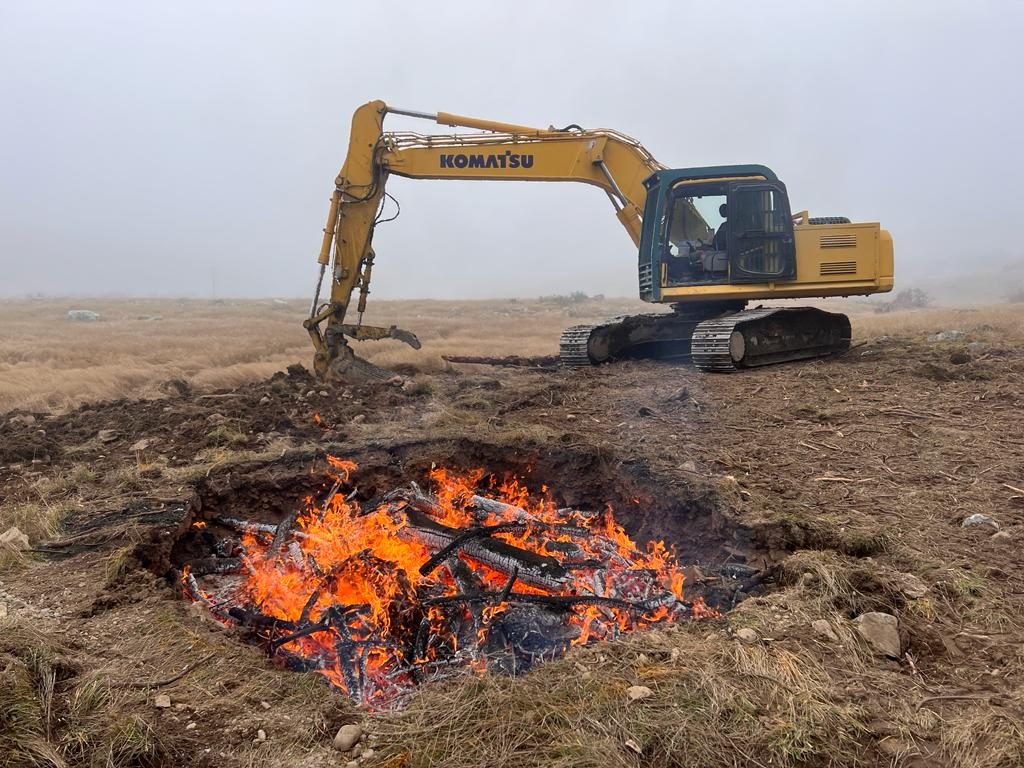
BNNZ facilitated a
workshop with Pukaki Forestry Ltd presenting the basics of biochar production and its applications. The project aimed to demonstrate alternative ways of managing the residues from wilding pine control and eradication.
Participants: Biochar Network New Zealand, Pukaki Forestry Ltd
News release
Late 2023 · Pukerau, Southland
Southland Carbon begins producing biochar
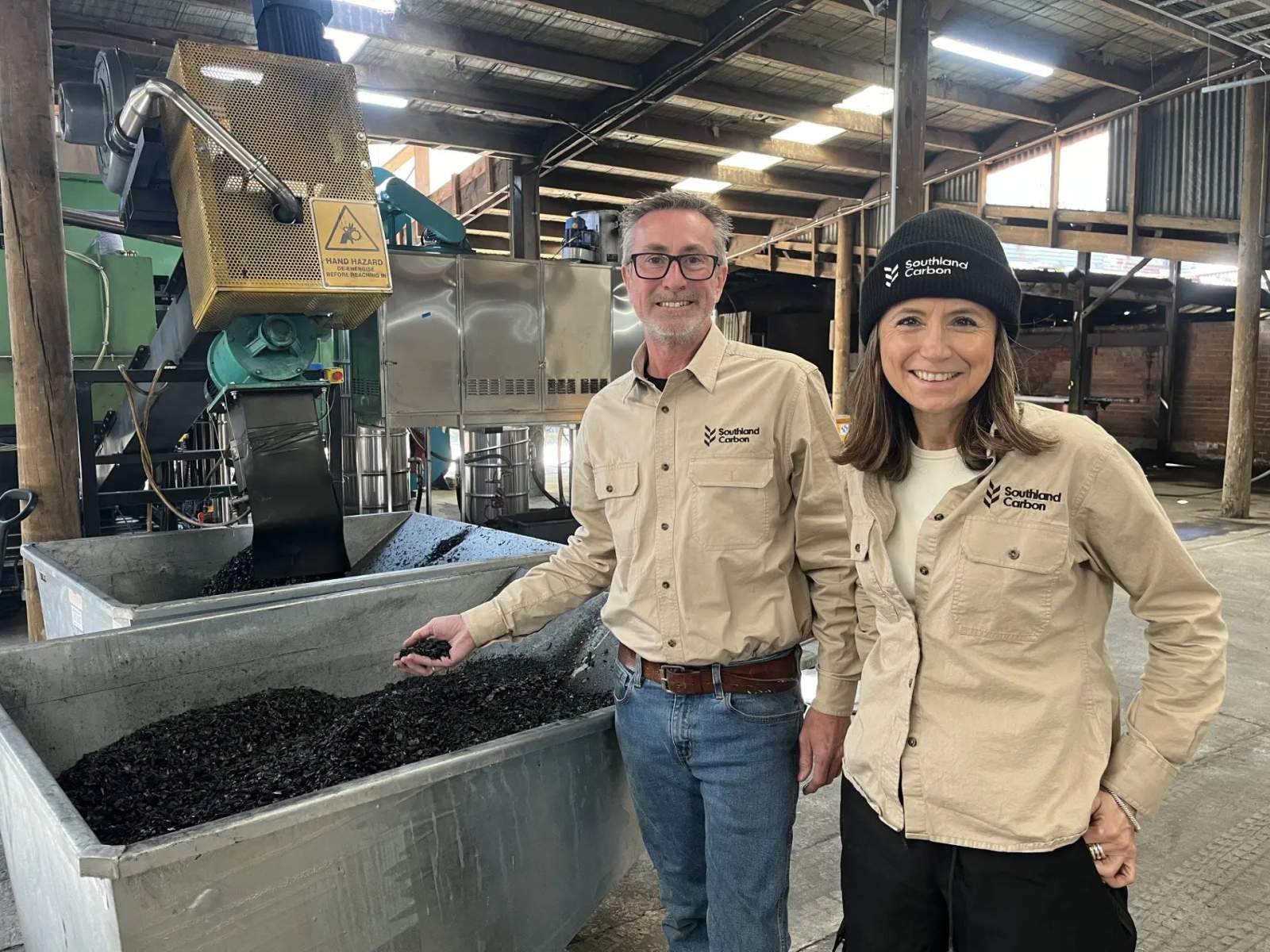
Andrew and Toula Finlayson bought the former Norton's Brick and Tile site at Pukerau in 2020. They commissioned a kiln from Australia and began producing biochar from local wood chips in late 2023. Much of the biochar is fed to livestock, which spread it through their manure, and wood vinegar is a by-product.
Participants: Andrew and Toula Finlayson
Otago Daily Times article
2024 · Marlborough
The Green Circle and Yealands: pyrolysis of grape marc and vine waste
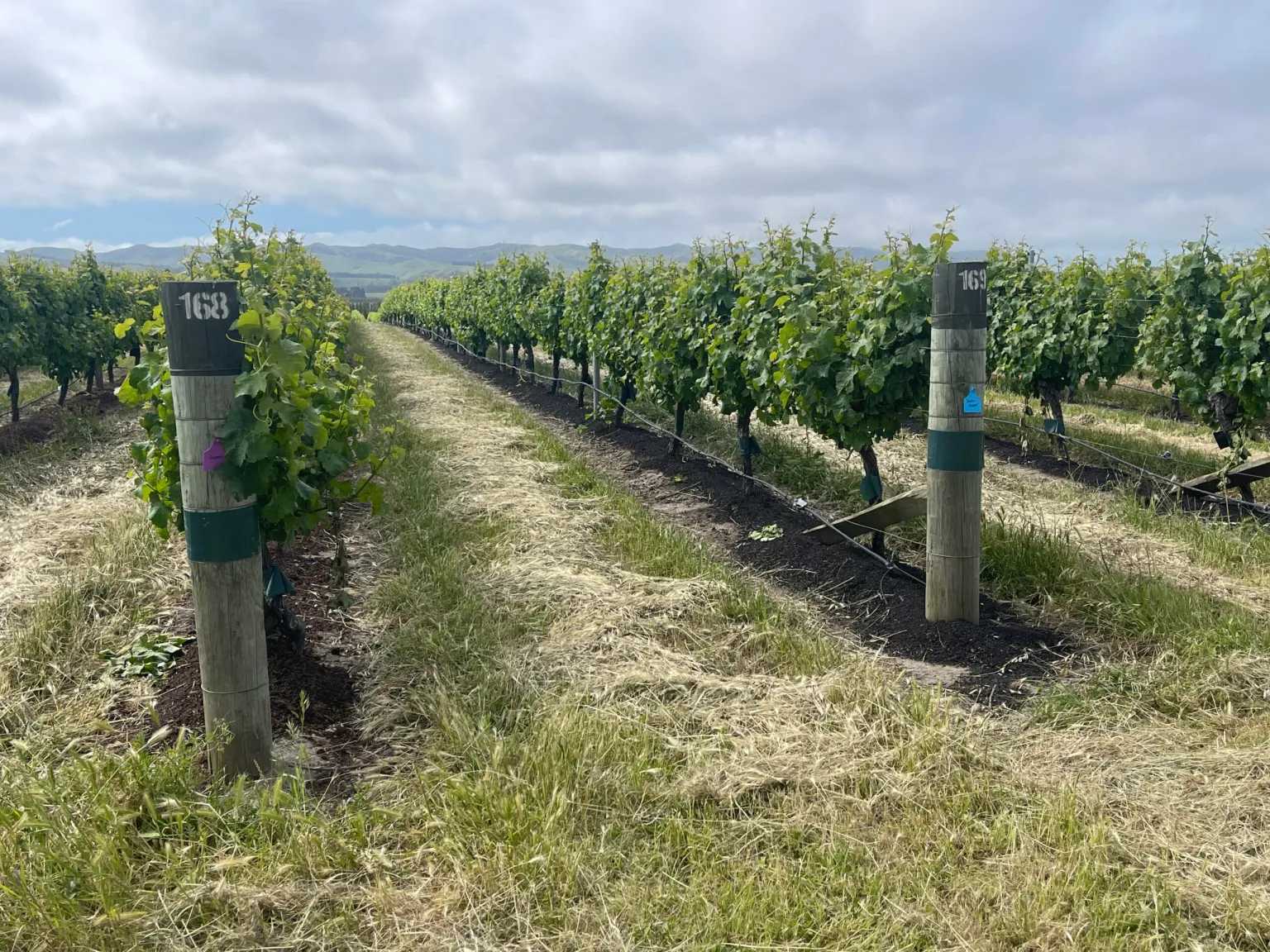
Blenheim start-up The Green Circle worked with Yealands Wine on a pyrolysis system that turns forestry wood waste, grapevine stumps and grape marc into biochar. A pilot machine was demonstrated during Climate Action Week Marlborough in early 2024 and was used to dry marc at Yealands that vintage. Read the
case study.
Participants: The Green Circle (Steve Brennan, David Savidan), Yealands Wine
Biochar Today article
April 2024 · Australia and NZ
"A Farmer's Guide to Biochar" published
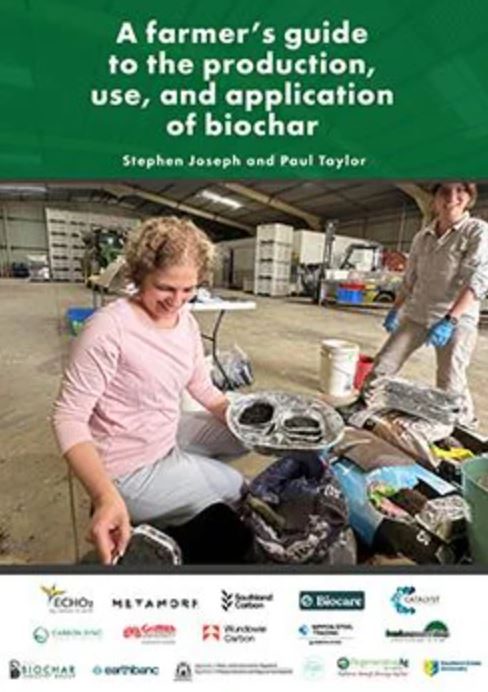
The Australia New Zealand Biochar Industry Group published A Farmer's Guide to Biochar by Stephen Joseph and Paul Taylor, bringing together the experience of farmers, gardeners and researchers on making and using biochar. The guide was launched at a member event on 7 August 2024.
Participants: ANZBIG, Stephen Joseph, Paul Taylor
Biochar Today article
Jan 2025 · NZ-wide
Char Chit Chat podcast started
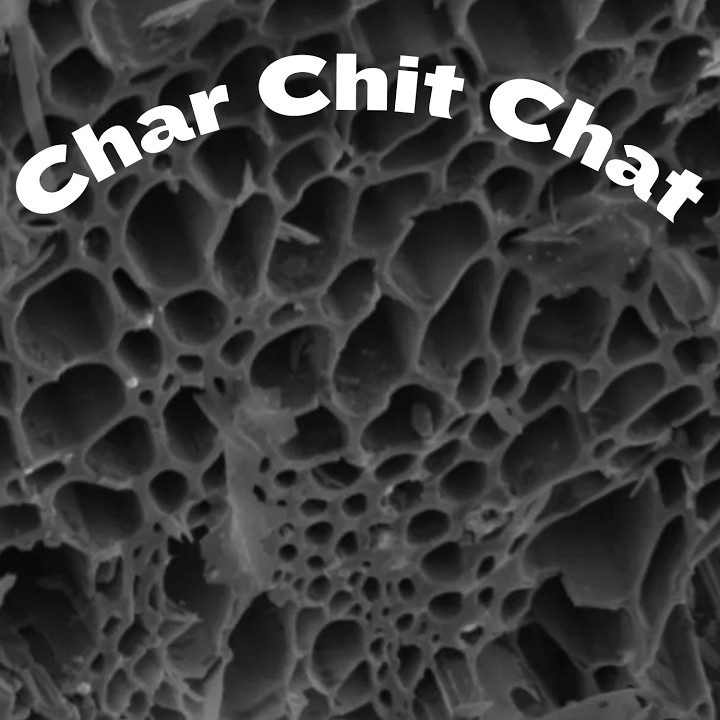
Char Chit Chat is created by Dylan Graves and explores char in New Zealand and beyond. The podcast aims to interview a range of people involved in biochar, activated charcoal, carbon anodes, and so on. The main subject will tend to be biochar as that is most accessible and scales from individuals making char in their woodstove over the winter to large industrial pyrolysis units outputting several tonnes per day. Biochar is also a great soil conditioner and improver and so is relevant to gardeners and farmers alike. Search for Char Chit Chat on your podcast app of choice.
Participants: Dylan and usually one or two guests at a time
10 May 2025 · Waikato
AgResearch biochar field experiment at Aramiro Station
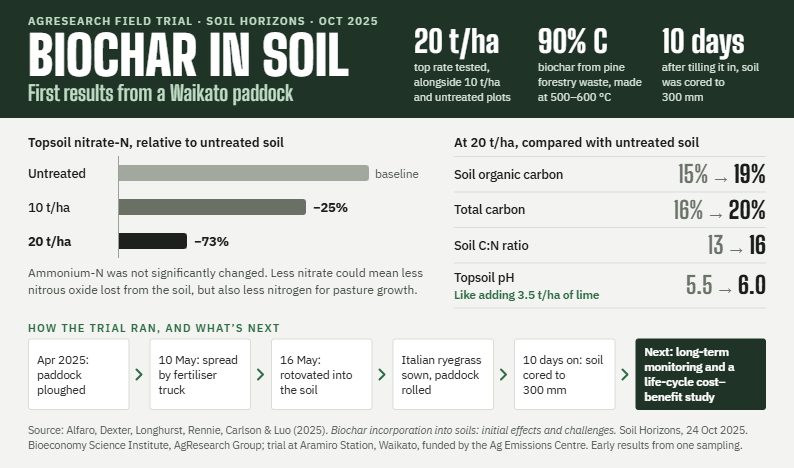
Scientists from AgResearch (Bioeconomy Science Institute), funded by the Ag Emissions Centre, set up a large plot experiment at Aramiro Station in Waikato to study the early effects of biochar in soil. Biochar made from pine forestry waste at 500-600°C was applied at 10 and 20 tonnes per hectare on 10 May 2025 and incorporated on 16 May, alongside untreated control plots. Early results showed higher soil organic carbon at the higher rate.
Participants: AgResearch (Bioeconomy Science Institute), Ag Emissions Centre
Soil Horizons article
23 May 2025 · Tairāwhiti
Air New Zealand funds slash-to-biochar for Tairāwhiti gardens
Air New Zealand's Every Corner Project funded The Good Carbon Farm to work with the Tolaga Bay Heritage Charitable Trust's Slash for Cash project. They are turning forestry debris left by Cyclone Gabrielle into biochar for school and community gardens, with the biochar to be distributed to Tairāwhiti schools and community groups in the second half of 2025.
Participants: The Good Carbon Farm, Tolaga Bay Heritage Charitable Trust, Air New Zealand
News release
Oct 2025 · Pukerau, Southland
Southland Carbon wins Environmental Leadership and Innovation in Business Award
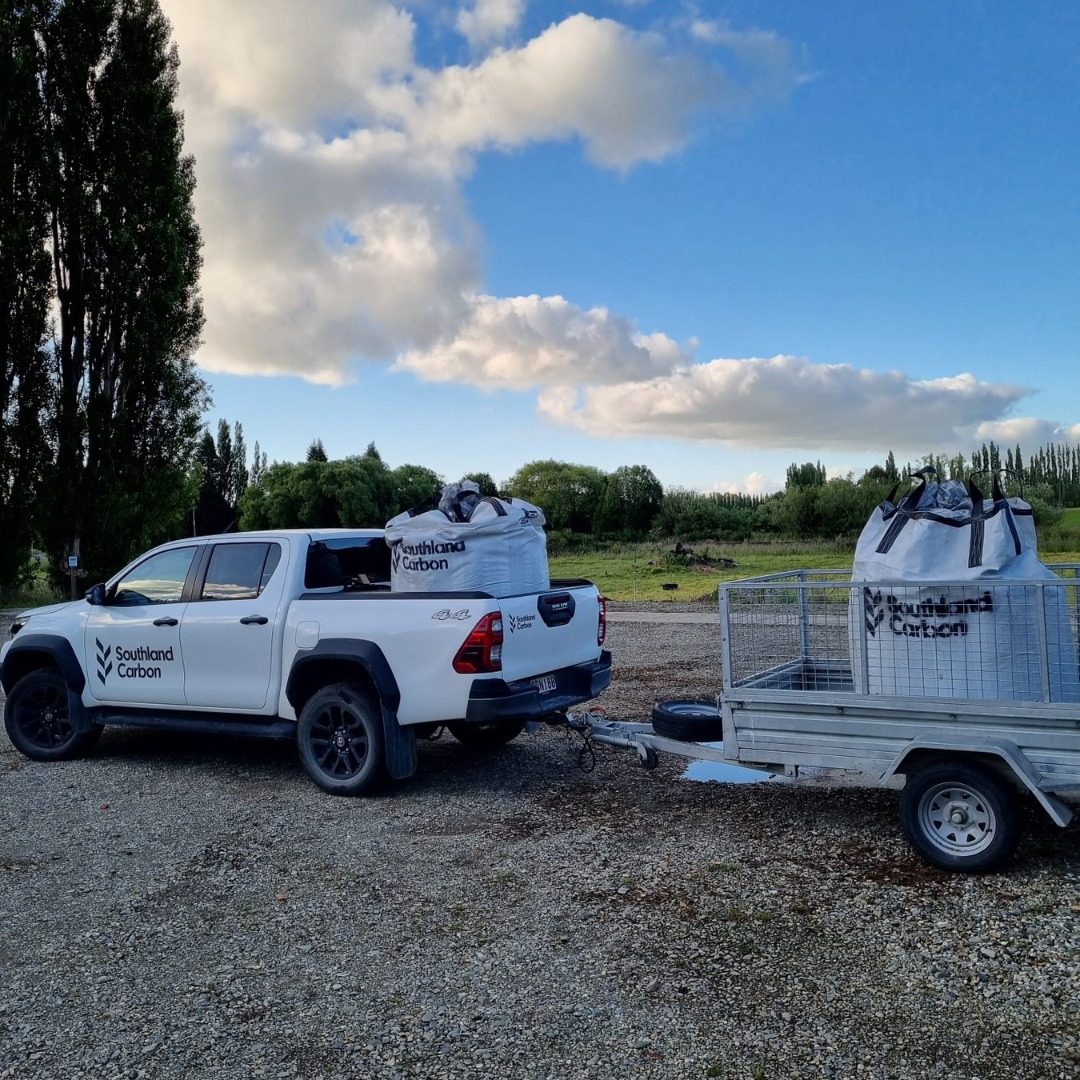
2025 Environment Southland (regional council) Community Awards
Founded by Andrew and Toula Finlayson, Southland Carbon turns forestry residues and plant material into biochar.
The process captures carbon that would otherwise be released into the atmosphere as the material decomposes.
The resulting biochar is long-lasting, remaining stable in soil for up to 1000 years.
Participants: Andrew and Toula Finlayson
https://www.es.govt.nz/about-us/community-awards/2025-environment-southland-community-awards
June 2026 · Mystery Creek, near Hamilton
BNNZ attends Fieldays again
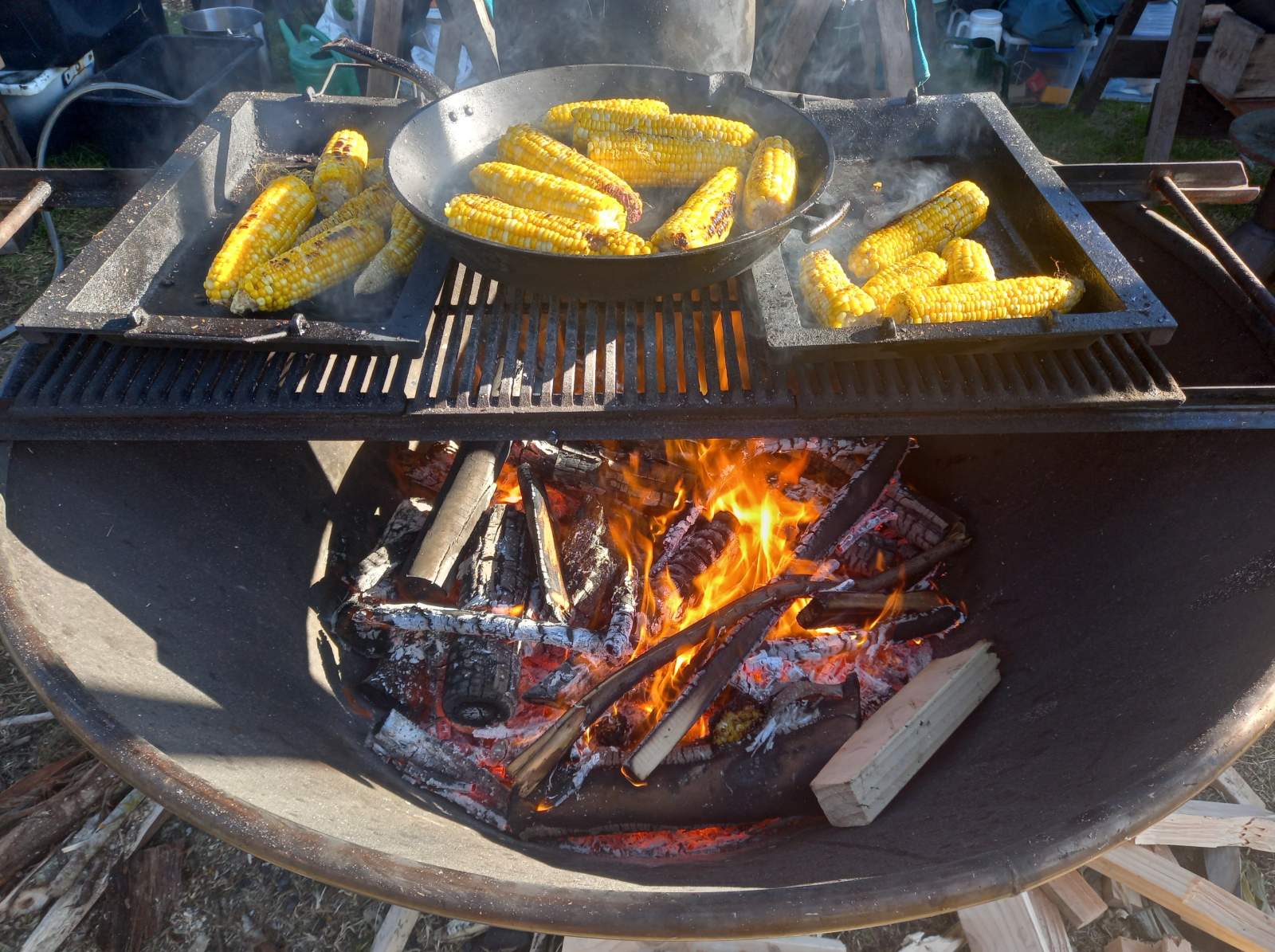
BNNZ had another smashing success at the Mystery Creek Fieldays in mid June, where we once again set up a live biochar demo at the Forestry Hub and cooked up treats for the punters.
Participants: BNNZ Committee and volunteers, Forestry Hub
Fieldays Report